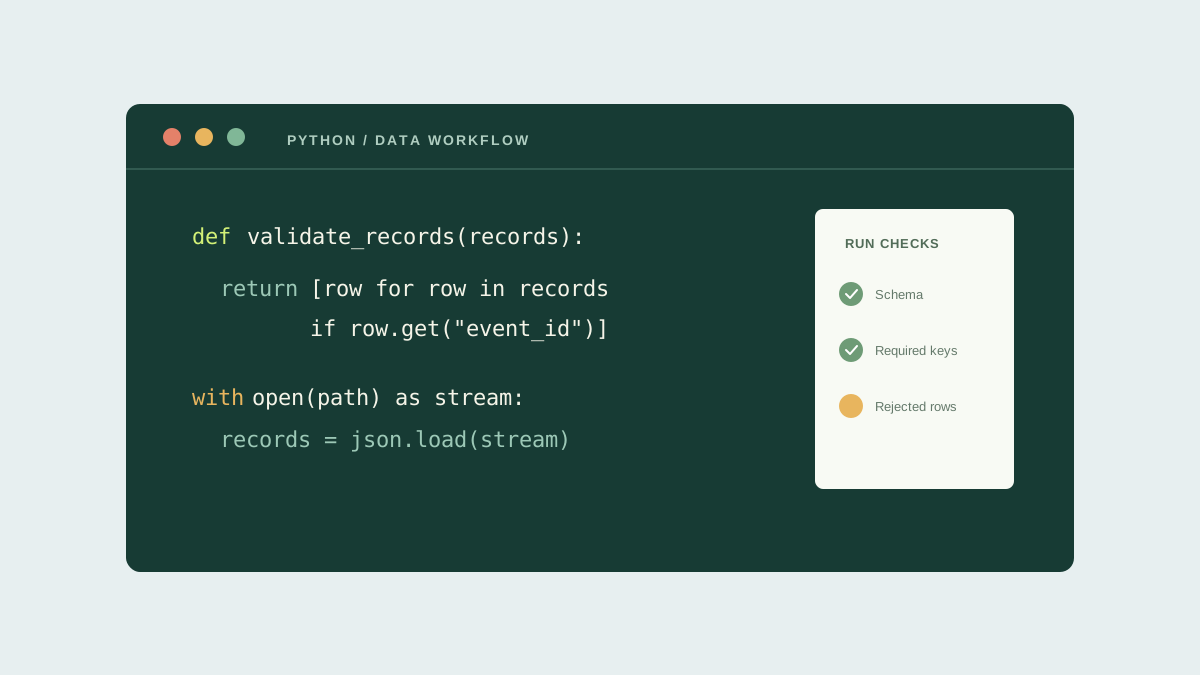
Data engineers use Python to connect systems, automate repeatable tasks, validate files, and coordinate transformations. Fluency comes from understanding basic language behavior and writing code that is testable and safe to rerun.
Build the language foundation
- Values, strings, numbers, booleans, lists, tuples, sets, and dictionaries.
- Conditions, loops, comprehensions, and functions with clear inputs and outputs.
- Modules and packages that keep reusable logic separate from command-line entry points.
- Exceptions that distinguish expected input problems from unexpected failures.
Work with files, APIs, and JSON
Practice reading files with context managers, parsing JSON, validating required fields, and writing output atomically when appropriate. For APIs, understand pagination, timeouts, rate limits, status codes, and bounded retries. Treat credentials as configuration managed outside source code.
import json
from pathlib import Path

source = Path("events.json")
with source.open(encoding="utf-8") as stream:
    records = json.load(stream)

valid_records = [
    record for record in records
    if record.get("event_id") and record.get("occurred_at")
]
Make data scripts dependable
- Use logging with a run identifier and useful counts instead of relying on print statements.
- Handle malformed input deliberately and retain a reason for rejected records.
- Write small tests for parsing, validation, and edge cases such as missing values.
- Learn enough pandas to inspect and transform data that fits its memory model; use other tools when the workload does not.
- Automate repeatable work only after defining how failures, retries, and partial output are handled.
Share this article
Continue your learning journeyExplore Interview Support