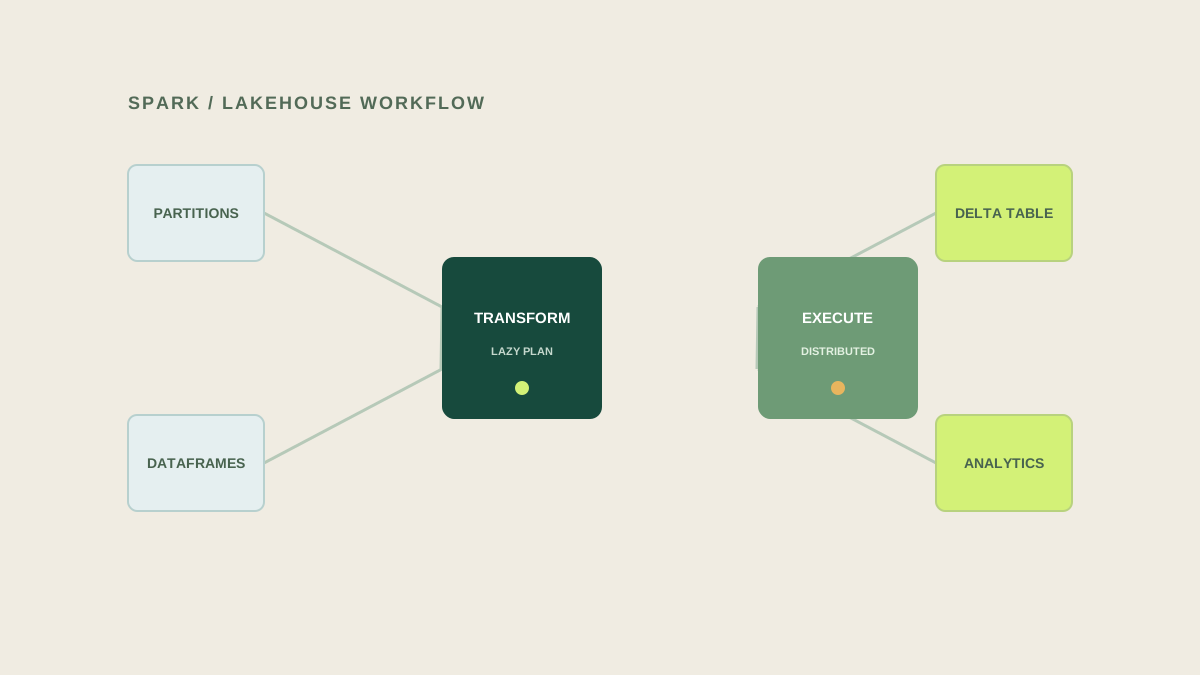
Databricks provides a platform for data and analytics workflows, including Spark-based processing. PySpark exposes Spark APIs through Python. Together they let a team transform structured data across distributed compute, while the platform supplies workspace, job, and table-management capabilities.
DataFrames, transformations, and actions
A Spark DataFrame is a distributed collection of rows with named columns and a schema. Operations such as select, filter, and join build a logical plan. They are transformations and are generally lazy. An action such as count or writing output requests execution.
from pyspark.sql import functions as F

clean = (
    events
    .filter(F.col("event_id").isNotNull())
    .withColumn("event_date", F.to_date("occurred_at"))
)

by_day = clean.groupBy("event_date").count()
by_day.write.format("delta").mode("overwrite").saveAsTable("analytics.events_by_day")
Partitions, joins, and performance
- Partitions divide distributed work; they are not the same thing as logical window partitions.
- Joins can move data across the cluster. Check key uniqueness and data skew when row counts or runtime look unexpected.
- Avoid collecting a large DataFrame to the driver. Inspect plans and use built-in expressions when they can express the transformation.
- Partitioning and file layout should follow table size and query patterns; too many small files or partitions can add overhead.
Delta Lake in the workflow
Delta tables add transaction-log-backed table behavior over data files. They support reliable writes and table operations such as MERGE in supported environments. Delta is not a substitute for retention planning, access controls, quality checks, or backups for every recovery scenario.