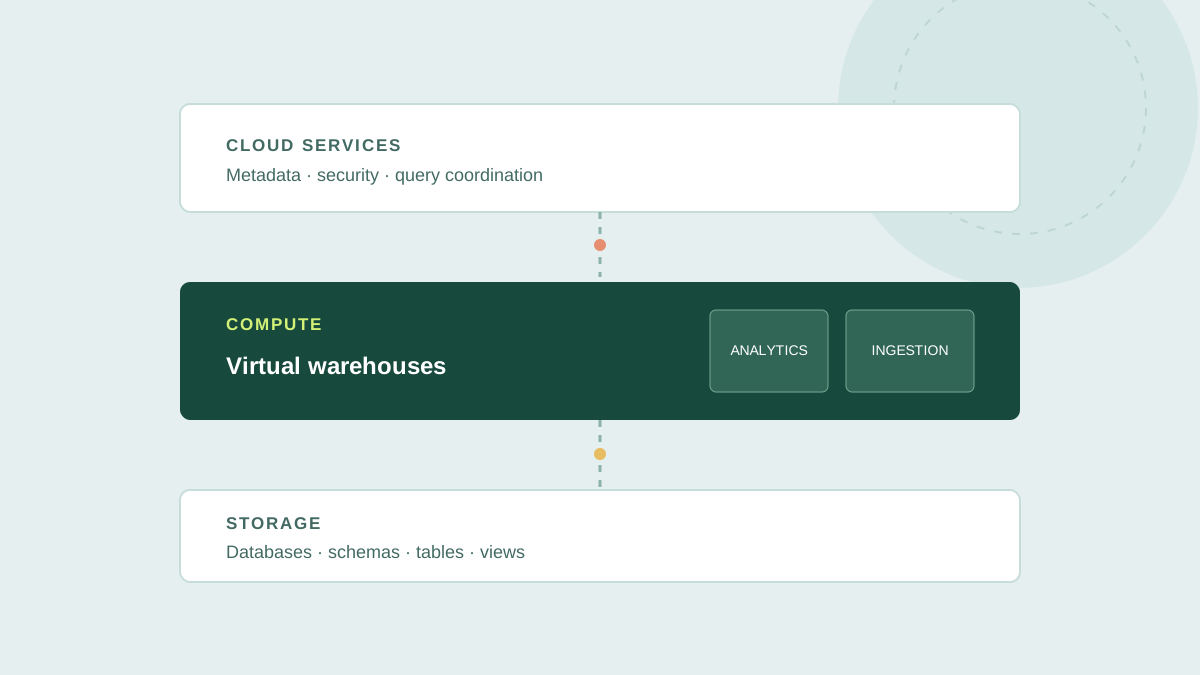
Snowflake is a managed cloud data platform. Its architecture separates persistent data storage from query compute, with a cloud services layer coordinating metadata, security, and query planning. That separation lets teams reason about data organization and workload capacity independently.
Storage, compute, and cloud services
- Storage holds table data in a managed, columnar format. Snowflake manages the underlying organization and metadata.
- Compute is provided by virtual warehouses. A warehouse executes queries and data-processing work; it is not the same thing as a database.
- Cloud services coordinate activities such as authentication, metadata management, access control, and query optimization.
Where databases, schemas, and tables fit
Within an account, databases contain schemas, and schemas organize tables, views, stages, and other objects. A warehouse supplies compute to query or load those objects. Keeping these responsibilities distinct makes permissions and ownership easier to discuss.
Virtual warehouse scaling
Teams can choose warehouse size and operating policies based on workload needs. Separate warehouses can isolate workloads with different concurrency or latency requirements. Multi-cluster behavior can add compute capacity for concurrency, while resizing changes the capacity available to a workload. These choices affect cost and should be driven by measured behavior.
A concise interview explanation
Describe three layers: cloud services coordinate the platform, virtual warehouses provide independent compute, and managed storage holds the data. Then connect databases and schemas to organization, and explain that separating compute from storage supports workload isolation and independent scaling.
- What work does a virtual warehouse perform?
- How can two teams avoid competing for the same compute capacity?
- What evidence would you inspect before changing warehouse size?
- How do databases and schemas organize table objects?