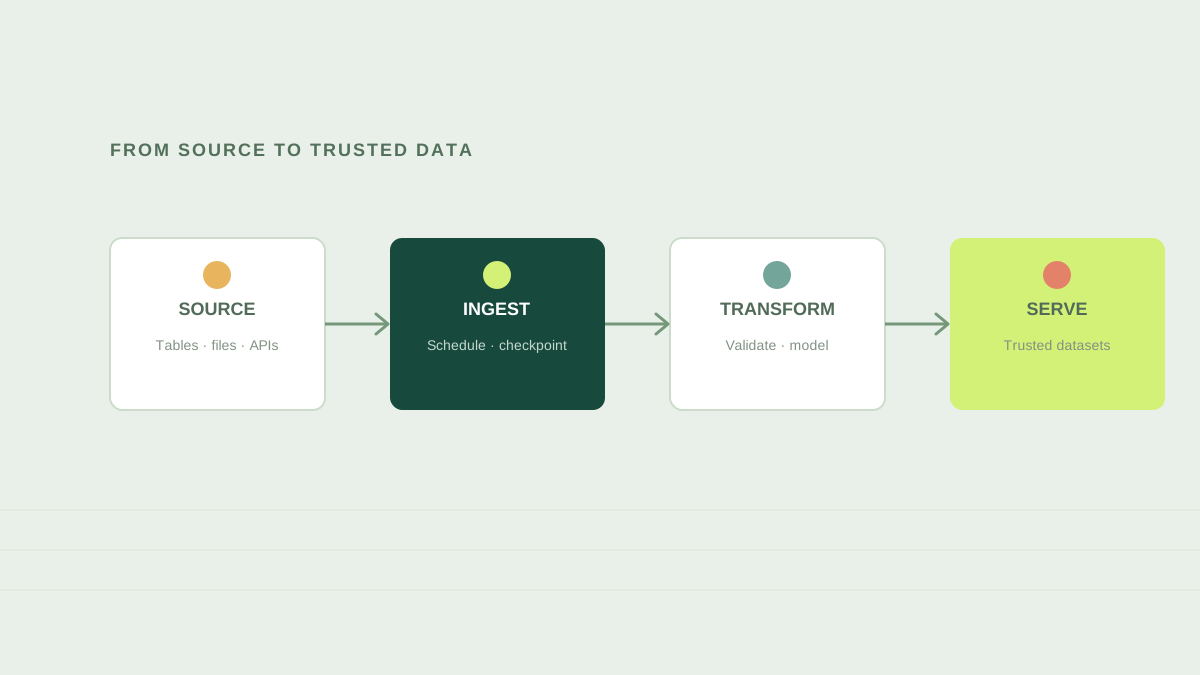
ETL: transform before loading
ETL means extract, transform, load. Data is read from a source, shaped in a processing layer, and then written to the target. This can be useful when the target should receive only curated data or when transformations belong in a separate compute environment.
ELT: load before transforming
ELT means extract, load, transform. Data is first loaded into the target platform, often in a raw or source-aligned form, and then transformed with the target's compute. This can preserve raw input for replay and use the warehouse or lakehouse for scalable transformations.
Compare the architecture, not just the acronym
- ETL may suit constrained targets, established integration platforms, or requirements to transform before data crosses a boundary.
- ELT may suit cloud platforms with flexible storage and scalable SQL or distributed compute.
- Either approach still needs schema management, validation, access controls, lineage, failure handling, and cost awareness.
- A hybrid design is common: validate or minimize sensitive data before landing, then perform additional transformations in the target.
An interview-ready explanation
ETL transforms data before it reaches the target; ELT loads first and transforms in the target platform. I would choose based on security boundaries, processing capability, replay needs, workload cost, and how quickly consumers need trusted data.