Interview preparation works best when it balances fundamentals with clear explanations. Start from the role description, identify the likely skill areas, and practice communicating your reasoning rather than memorizing isolated answers.
Cover the technical foundations
- SQL: joins, aggregation, NULL behavior, window functions, query plans, and data correctness.
- Python: data structures, functions, file and API handling, exceptions, testing, and readable code.
- Data engineering: ETL/ELT, incremental loads, modeling, CDC, data quality, orchestration, and recovery.
- Cloud and Spark: understand core services, distributed processing, storage/compute trade-offs, and when each is useful.
Prepare project and scenario stories
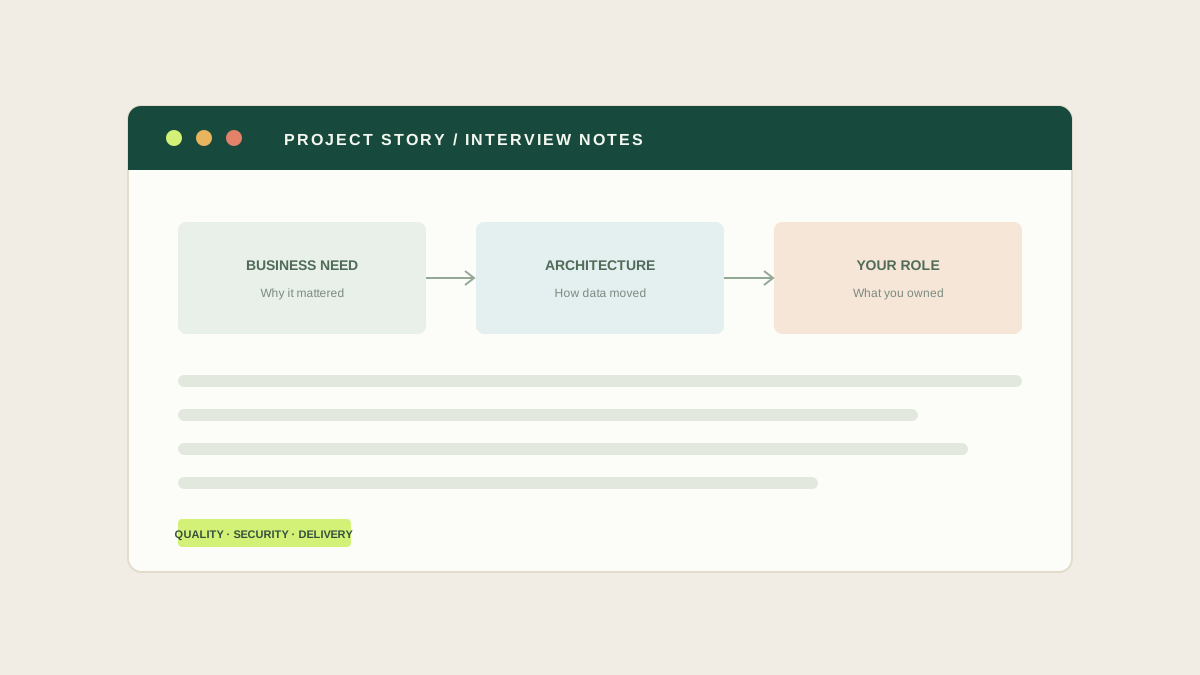
Choose one or two projects you can explain from the business problem through deployment and monitoring. Be precise about your role, the alternatives considered, and what evidence showed that the result worked.
- Practice scenario questions about late data, schema changes, duplicate records, and failed pipeline runs.
- Review your resume and be ready to explain every tool or outcome you list.
- Use a mock interview to practice listening, clarifying assumptions, and structuring answers.
- Prepare questions about the team's data products, operating expectations, and collaboration practices.
A simple preparation rhythm
Rotate focused SQL or Python practice with project explanations and scenario discussions. After each session, note one gap to revisit. Prioritize the role's requirements and your ability to reason clearly over trying to cover every technology.
Share this article
Continue your learning journeyExplore Interview Support