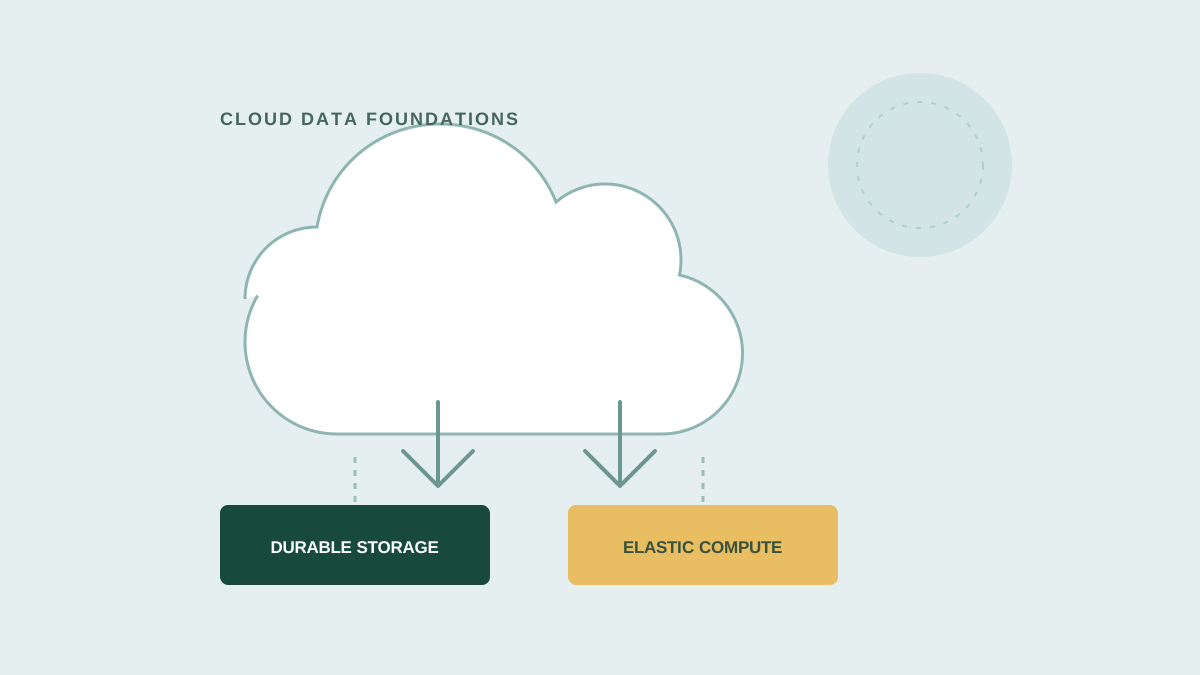
Cloud data platforms combine durable storage with compute services that ingest, transform, query, and serve data. A good design makes those responsibilities clear and matches the service boundaries to security and operating needs.
Separate storage from processing
- Object storage is useful for durable files and lake-style data zones.
- Warehouses provide managed analytical query capabilities over structured data.
- Distributed processing engines handle transformations that need parallel compute.
- Orchestrators coordinate dependencies and schedules but do not replace data validation.
Design for the workload
Choose batch when bounded, scheduled updates meet freshness needs; consider event-driven or streaming designs when the business requires lower latency and can support the added operational complexity. Size compute using observed volume, concurrency, and service-level requirements.
Security and operations are part of architecture
- Use managed identities or an equivalent secret-management pattern where supported.
- Separate environments and grant each workload only the access it needs.
- Track freshness, duration, volume, cost, errors, and quality outcomes.
- Plan how to replay, recover, and inspect a failed run before the first incident.
Share this article
Continue your learning journeyExplore Interview Support